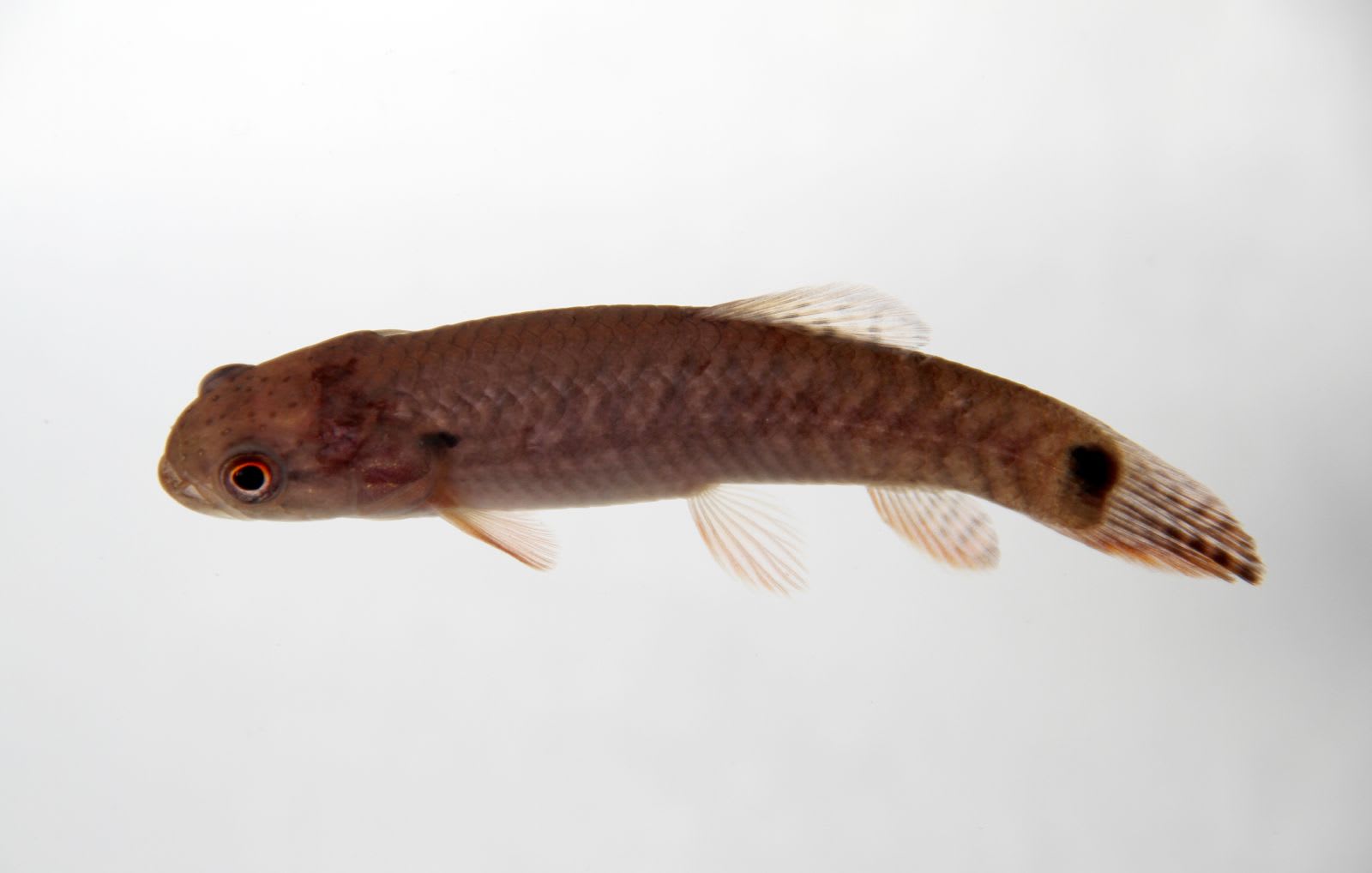
Red Wolf Fish
Erythrinus erythrinus
Parameter dashboard
22-26 °C
5.5-7.5
20 cm
Care guide
The red wolf fish, also known as the rainbow wolf fish, is a predatory species from South America with a wide distribution across Peru, French Guiana, Venezuela, Trinidad, and Brazil. Juveniles from certain localities exhibit a remarkable mimicry of female killifish colour patterns to ambush unsuspecting males. Adults reach approximately 20 cm (8 inches) and develop a striking red-orange hue on the belly and fins, especially in the Peruvian variant, though the species may represent a complex of closely related forms.
Despite its modest size, the red wolf fish is a voracious predator with sharp teeth and should not be trusted with any fish small enough to fit in its mouth. It is best maintained singly in a heavily-planted aquarium with floating vegetation. Conspecifics may fight lethally; similarly sized tankmates are a specialist option in a larger aquarium, while smaller fish are prey. A tightly-sealing cover is essential — this fish is an accomplished escape artist, possessing a modified swim bladder that allows it to breathe atmospheric air and even travel short distances over land. A tank with base dimensions of 120 cm x 30 cm (approximately 108 litres) is the minimum for a single adult.
Water parameters should be 22-26°C, pH 5.5-7.5, with soft to moderate hardness. The diet must be meaty: earthworms, prawns, mussels, lancefish, and sinking carnivore pellets (if accepted) — dried foods are often refused. The red wolf fish is strictly for specialist keepers who can provide the space, water quality, and dietary regime this remarkable predator requires. Its secretive nature, intense feeding response, and unusual respiratory adaptation make it one of the most fascinating oddball species available to the dedicated aquarist.
Sources
- seriouslyfish.com — https://www.seriouslyfish.com/species/erythrinus-erythrinus/
- fishbase.de — https://www.fishbase.de/summary/Erythrinus-erythrinus.html
Further reading on identification and aquarium care.
Tankmate compatibility (sample)
Pairwise screening against other species in the database (prioritizing the same family when data is available).
Review first (11)
Caution or avoid from automated rules — confirm before mixing.
| Species | Assessment | Notes |
|---|---|---|
| Cardinal tetra Paracheirodon axelrodi Caution | Caution | Fish 2x+ larger may eat smaller tankmates Open pair in Compare → |
| Chinese Bitterling Rhodeus ocellatus Caution | Caution | Fish 2x+ larger may eat smaller tankmates Open pair in Compare → |
| Fasciatus Shell Dweller Altolamprologus fasciatus Caution | Caution | Species with non-overlapping pH ranges may not thrive together Open pair in Compare → |
| Forktail rainbowfish Pseudomugil furcatus Caution | Caution | Fish 2x+ larger may eat smaller tankmates Open pair in Compare → |
| Giant Whiptail Sturisomatichthys aureus Caution | Caution | one is boisterous and the other a much smaller peaceful fish sharing the same floor, where it can be intimidated and outcompeted at feeding time Open pair in Compare → |
| Gray bichir Polypterus senegalus Caution | Caution | Fish 2x+ larger may eat smaller tankmates · Multiple territorial species in the same swim layer cause stress · the two share only a narrow band of temperature, so one of them sits at the edge of its range Open pair in Compare → |
| Lizard Loach Homaloptera orthogoniata Caution | Caution | Fish 2x+ larger may eat smaller tankmates · one is boisterous and the other a much smaller peaceful fish sharing the same floor, where it can be intimidated and outcompeted at feeding time Open pair in Compare → |
| Red Neon Goby Stiphodon atropurpureus Caution | Caution | Fish 2x+ larger may eat smaller tankmates Open pair in Compare → |
| Sterba's cory Corydoras sterbai Caution | Caution | Fish 2x+ larger may eat smaller tankmates · one is boisterous and the other a much smaller peaceful fish sharing the same floor, where it can be intimidated and outcompeted at feeding time Open pair in Compare → |
| Temporaris Shell Dweller Telmatochromis temporalis Caution | Caution | Fish 2x+ larger may eat smaller tankmates · Species with non-overlapping pH ranges may not thrive together · the two share only a narrow band of temperature, so one of them sits at the edge of its range Open pair in Compare → |
| Twig Catfish Farlowella vittata Caution | Caution | one is boisterous and the other a much smaller peaceful fish sharing the same floor, where it can be intimidated and outcompeted at feeding time Open pair in Compare → |
1 species with compatible assessment in this sampleCollapse to hide the list; use “Open pair in Compare” for the full matrix.
| Species | Assessment | Notes |
|---|---|---|
| Peacock eel Macrognathus siamensis Compatible | Compatible | No rule-based conflicts detected for this pair. Open pair in Compare → |
Same rule engine as Compare. Not a substitute for observation, tank size, or acclimation.
Was this page useful? Spot anything wrong?