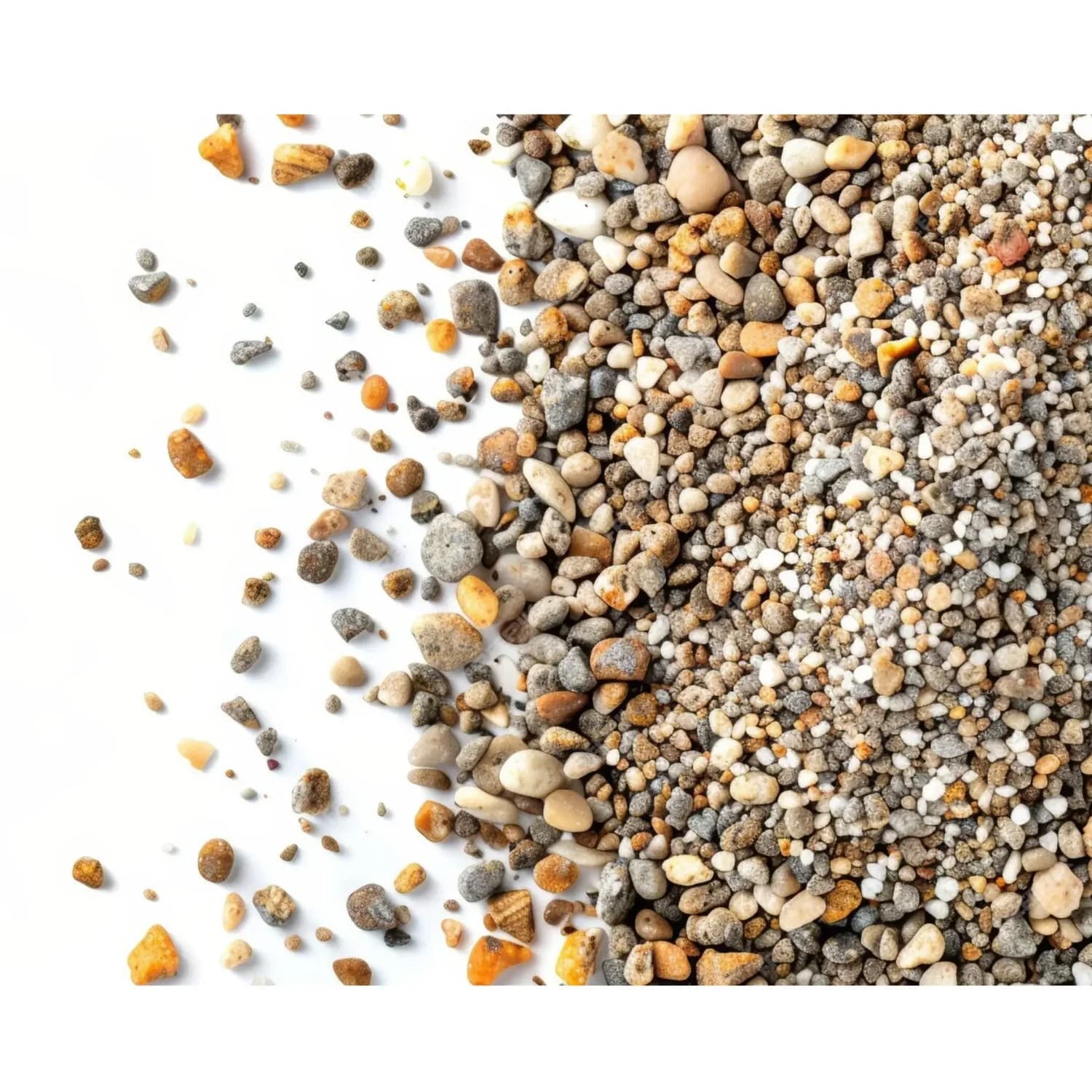
Representative photo. The product you buy may differ in size, colour or packaging.
Inert Clay-Gravel Substrate
Seachem Flourite Dark
substrate
Used for: Planted tanks, Aquascaping
Specifications
| Specification | Value |
|---|---|
| Pack size | 3.5 kg, 7 kg |
| Material | Specially fracted stable porous clay gravel |
| pH (as stated) | Manufacturer states: does not alter pH |
Source checked on 2026-10-01.
Description
Flourite Dark is a porous clay gravel for planted freshwater aquariums. It can form the whole substrate bed or be mixed with other gravel; a laterite layer is not required. Seachem states that the untreated gravel does not alter pH. That is a specific pH claim, not a guarantee that no aspect of water chemistry can ever change. Choose the amount by tank footprint and desired substrate depth. The product comes in 3.5 kg and 7 kg bags, and Seachem provides a calculator using aquarium length, width and bed depth. Its FAQ treats liquid fertiliser and root tablets as optional additions according to the planting, rather than a compulsory layer underneath the gravel. Although pre-washed, the gravel can collect dust in transit. Rinse residual dust before use, fill gently over a bowl to avoid disturbing the bed, and use mechanical filtration such as filter floss for initial cloudiness. For additions to an established aquarium, the manufacturer recommends thoroughly rinsed small batches rather than a large dusty addition.
Source
Further reading on identification and aquarium care.
Related equipment
Was this page useful? Spot anything wrong?