Africa

Humphead cichlid
Cyphotilapia frontosa
Temp23–27°C
pH8–9
Size25 cm
DietOmnivore
Swim—
DifficultyModerate
Adult tank400 L
Recommended group—
Humphead cichlid
Cyphotilapia frontosa
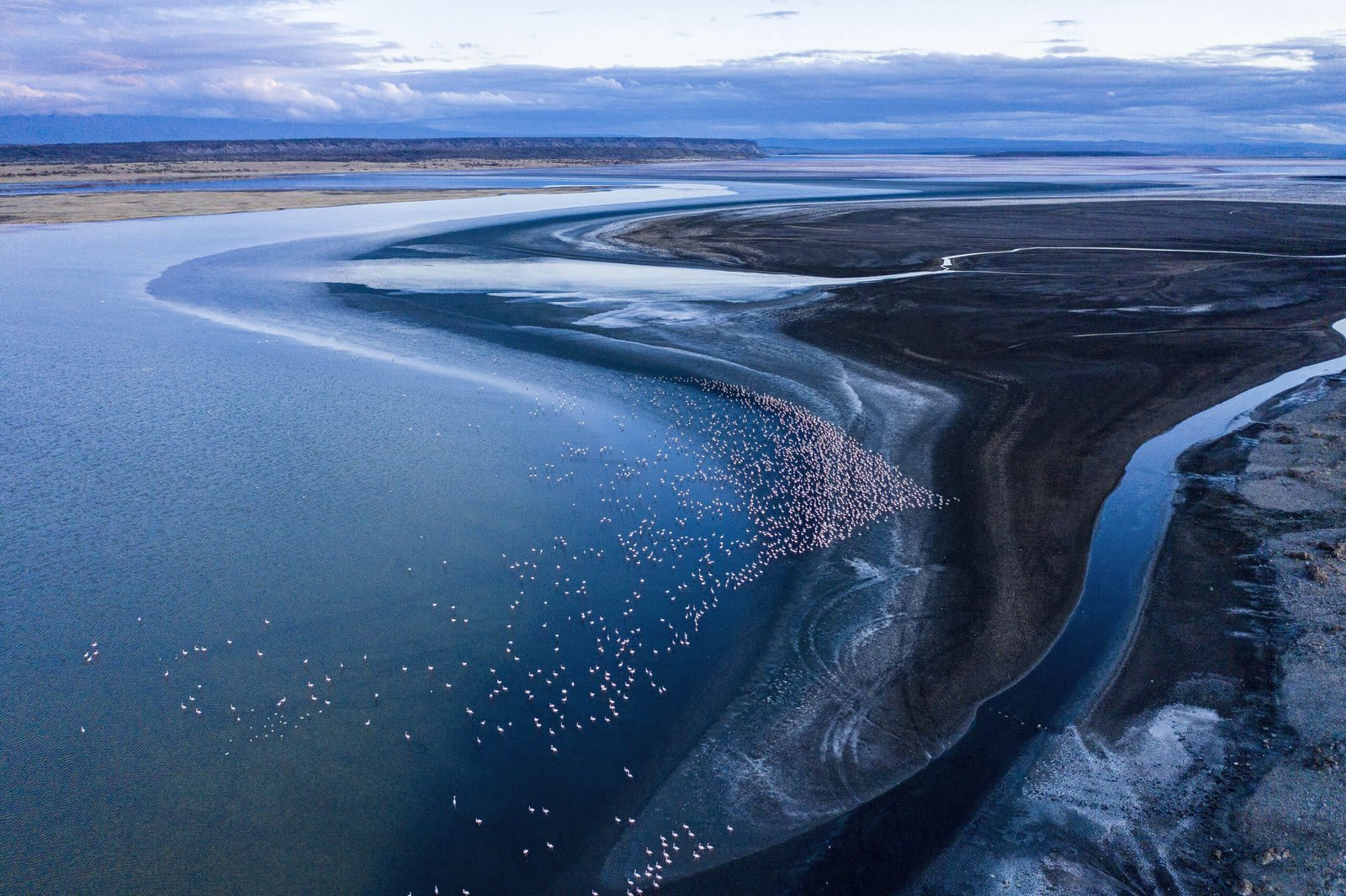
Lake Tanganyika is 673 km long, 50 km across at its widest, and 1,471 m deep at the trough — the second deepest freshwater body on the planet, older than the Amazon basin in its current form by an order of magnitude. Nine to twelve million years of isolation have produced roughly 250 endemic cichlid species along its shoreline; that radiation, with Lake Malawi's parallel one to the south-east, is the single largest natural laboratory for vertebrate speciation known. Water at the surface holds at 24–27°C year-round, pH 8.6 to 9.0, conductivity around 600 µS/cm, with calcium and bicarbonate buffering that makes the lake feel closer to dilute seawater than to a river. Below 200 m the water is anoxic and unchanging; above it, life crowds the rocky shore in concentrations that no aquarium can imitate.
Each dry season — May to September — south-easterly trade winds push surface water toward the lake's north-west, and cold, nutrient-laden water upwells along the eastern shore. Diatom blooms follow within weeks; *Stolothrissa* sardines spawn against the plankton pulse; cichlids feed, court and breed in step. Shell-dwelling *Neolamprologus multifasciatus* defend territories barely larger than a man's hand, using the empty shells of an endemic snail, *Neothauma tanganyicense*, as cradle and fortress. *Tropheus* graze algae from boulders in tight matriarchal groups; *Cyprichromis* hover in mid-water columns hundreds strong, mouths catching plankton drifting through.
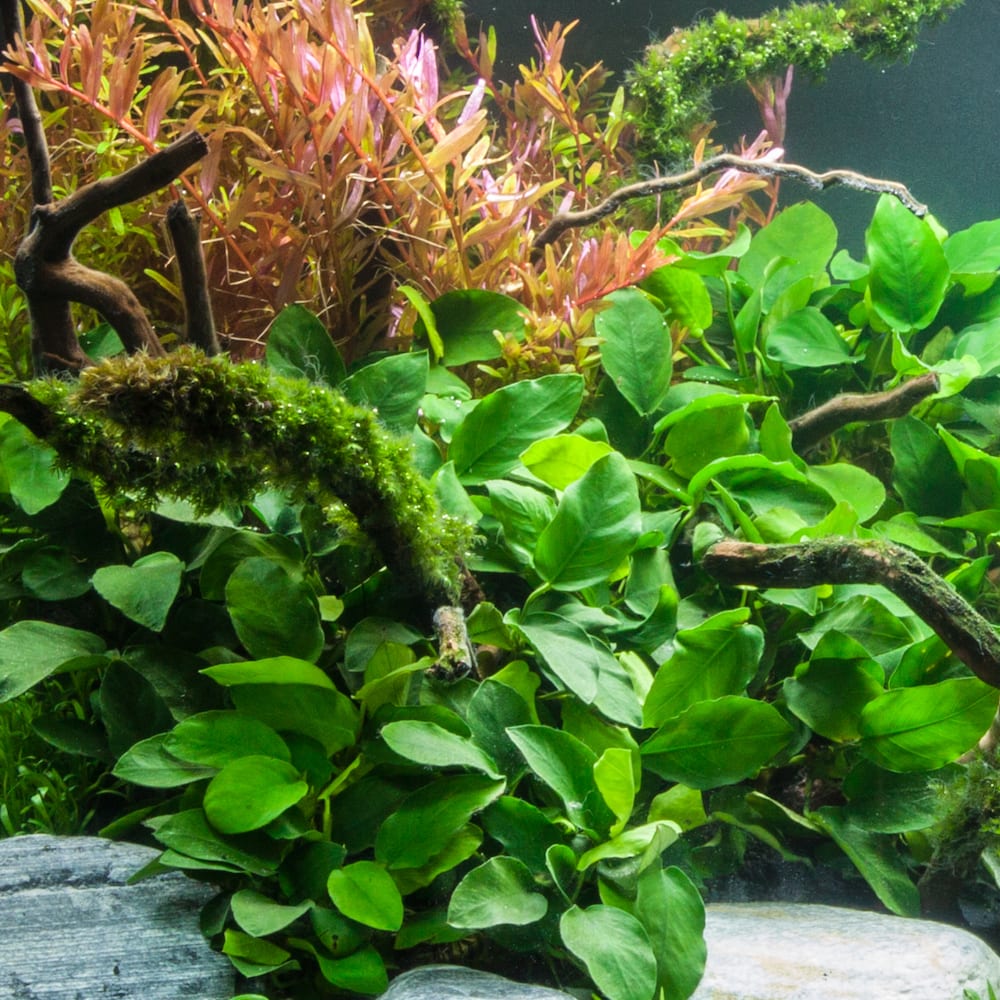
The shoreline belongs to four countries — Tanzania, the Democratic Republic of the Congo, Burundi, Zambia — and to Bantu fishing peoples (Bembe, Holoholo, Tabwa) whose night fishery for *dagaa* (the local name for that sardine) once landed over 200,000 tonnes a year. Catches have nearly halved since the 1990s as warming has slowed the upwelling cycle that feeds the lake. In a Tanganyika aquarium the conventional aesthetic — aragonite sand, a wall of holey rock, no plants — is correct, but austerity is not the point. The point is the water column itself: clear, hard, alkaline, oxygen-saturated, indifferent. Cichlid colour, behaviour and shape are how the lake speaks back.
Sources: Coulter, *Lake Tanganyika and Its Life* (1991); O'Reilly et al. *Nature* on Tanganyika warming and productivity (2003); FAO assessments of the Lake Tanganyika sardine fishery.