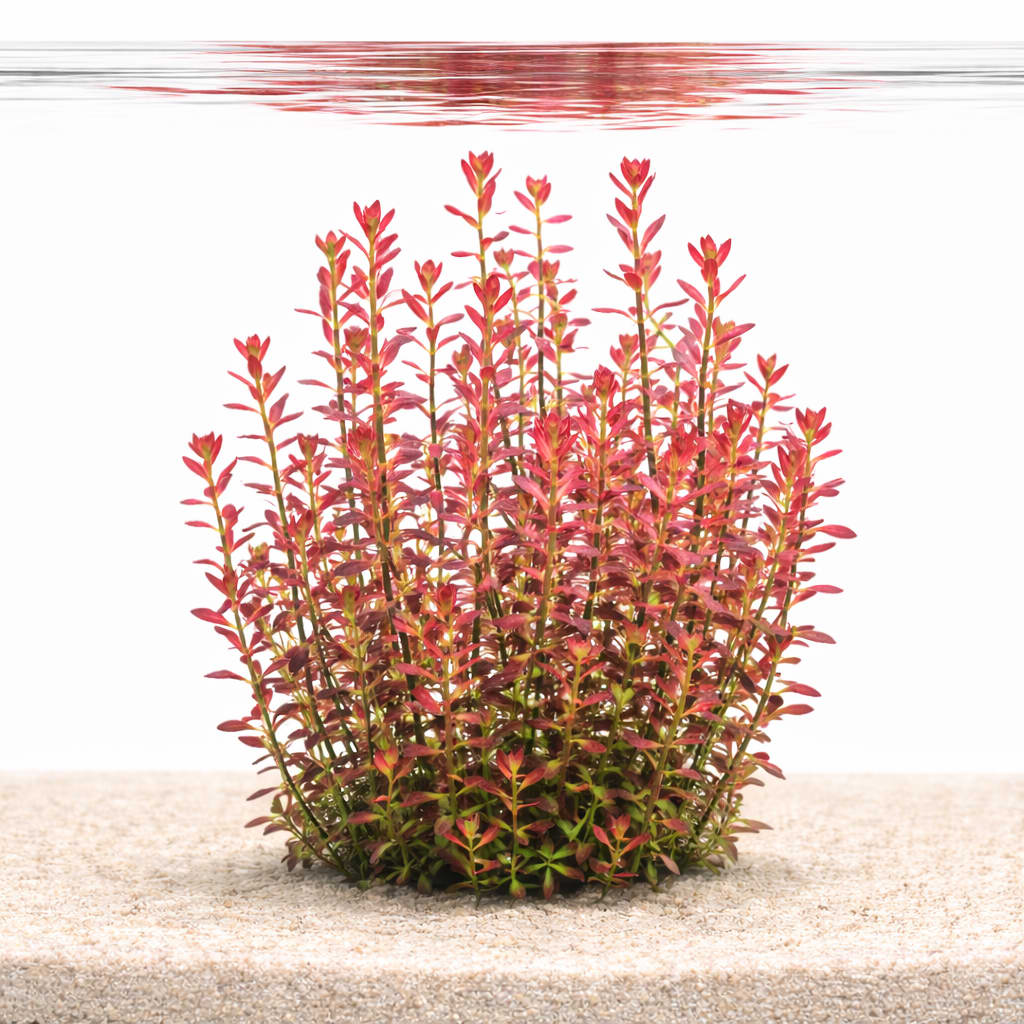
Florida Rotala
Rotala ramosior 'Florida'
Survival dashboard
High
Optional
22–28 °C
4.5–7
Aquascaping
Trim schedule (hint)
Expect trimming about every 2–4 weeks depending on light and nutrients.
Description
The Florida form of Rotala ramosior is sold in the trade under names such as Rotala ramosior 'Florida'. Flowgrow has no page for the cultivar itself; the figures below come from the parent species page, Rotala ramosior, which lists the 'Florida' form among related plants. Rotala ramosior is the only Rotala native to the United States, found in wetlands across much of North America, north to Ontario, growing emersed as well as submersed. The exact origin of the 'Florida' form is not confirmed in Flowgrow's data.
The parent species is not hard to keep once its needs are met. It wants strong light and should never stand in the shade of another plant; Flowgrow recommends fluorescent tubes or metal halide lamps. The optimum temperature is 22 to 28 °C with a pH of 4.5 to 7. Growth is medium. Carbon dioxide in the range Flowgrow lists is useful, as is iron, and the plant has no other special nutrient requirements. It is propagated by cuttings of lateral shoots.
Flowgrow documents the 'Florida' form only by name, in a list of related plants on the Rotala ramosior species page, and notes that trade plants sold under names like Rotala ramosior or Rotala sp. 'Sunset' are likely variants of this species. The link behind that name leads to no page, so Flowgrow holds no data for the form itself. Its other trade form, Rotala ramosior 'Sunset', does have a page, and it lists a harder difficulty and slower growth than the species; the species page also states that true R. ramosior is not yet in trade. The care values in the data sheet are therefore inherited from the parent species, not verified against a page for the cultivar itself, and the figures for difficulty, growth and placement should be read with that in mind. This entry is flagged for owner review.
Keep this species? Spot anything off?