← Back to equipment catalog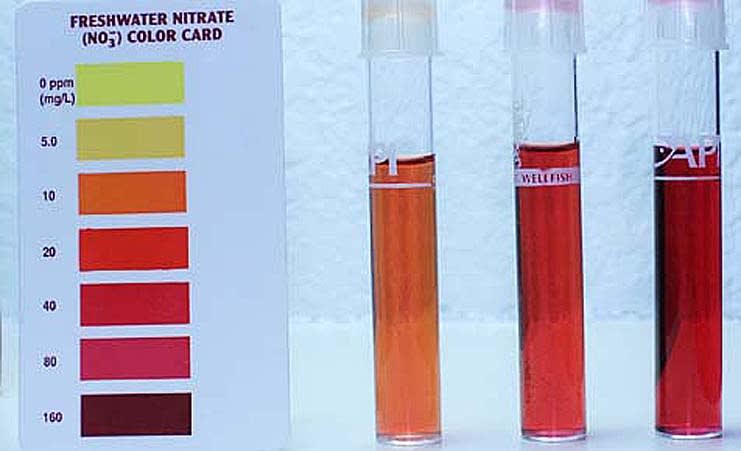
Hero image is from the maintained catalog (brand / product publicly-available assets or vetted stock). The physical product takes precedence.
Monitoring
Nitrate test
monitoring
Used for: Water testing, Tank maintenance
Description
EPA's Volunteer Stream Monitoring manual, written for people sampling streams, says volunteer programs usually test nitrate in one of two ways: the cadmium reduction method or a nitrate electrode. Cadmium reduction, the more common, is a color test: nitrate in the sample comes into contact with cadmium particles and is converted to nitrite, which then reacts with another reagent to form a red color whose intensity is proportional to the original amount of nitrate. The color is read against a color wheel or measured with a spectrophotometer. Both of the manual's procedures work in nitrate nitrogen (NO3-N). Its cadmium procedure has the result read in mg/L as nitrate nitrogen, and its electrode procedure expresses all concentrations and results as mg/L as NO3-N. Within the cadmium method, the color wheel is appropriate only above 1 mg/L, and below that a spectrophotometer should be used. Matching a low-concentration sample to a wheel by eye can be very subjective and give variable results, although comparators still work for finding sites with high nitrate. The sample has to be clear, so a turbid one is filtered first. Copper, iron or other metals present at more than several mg/L slow the reaction with the cadmium, so the reaction time has to be longer. Used cadmium particles go into a clearly labeled waste bottle with a secure lid, to be returned to the lab for proper disposal. The electrode costs more than a cadmium field kit. High chloride or bicarbonate can affect its accuracy, and fluctuating pH can affect the reading. For fish systems, the Merck Veterinary Manual's account of recirculating aquaculture calls nitrite a toxic intermediate and nitrate a much less toxic compound, though nitrate levels may be a problem for invertebrates and, at higher levels, for fish. Merck adds that more advanced systems include a denitrification step that turns nitrate into nitrogen gas. The EPA manual has a caution from streams: water polluted with nitrogen-rich organic matter might show low nitrate, because decomposition lowers dissolved oxygen and slows the oxidation of ammonia to nitrite and then to nitrate. In that case nitrite or ammonia may need testing too, and both are considerably more toxic to aquatic life than nitrate. The ammonia test liquid entry covers ammonia.
Sources
- epa.gov — https://www.epa.gov/sites/default/files/2015-04/documents/volunteer_stream_monitoring_a_methods_manual.pdf
- merckvetmanual.com — https://www.merckvetmanual.com/exotic-and-laboratory-animals/aquaculture/production-methods-in-aquaculture
Figures on this page were read off these pages. Manufacturers and databases do change or retire pages; if a link is dead, tell us with the correction link below.
Keep this species? Spot anything off?