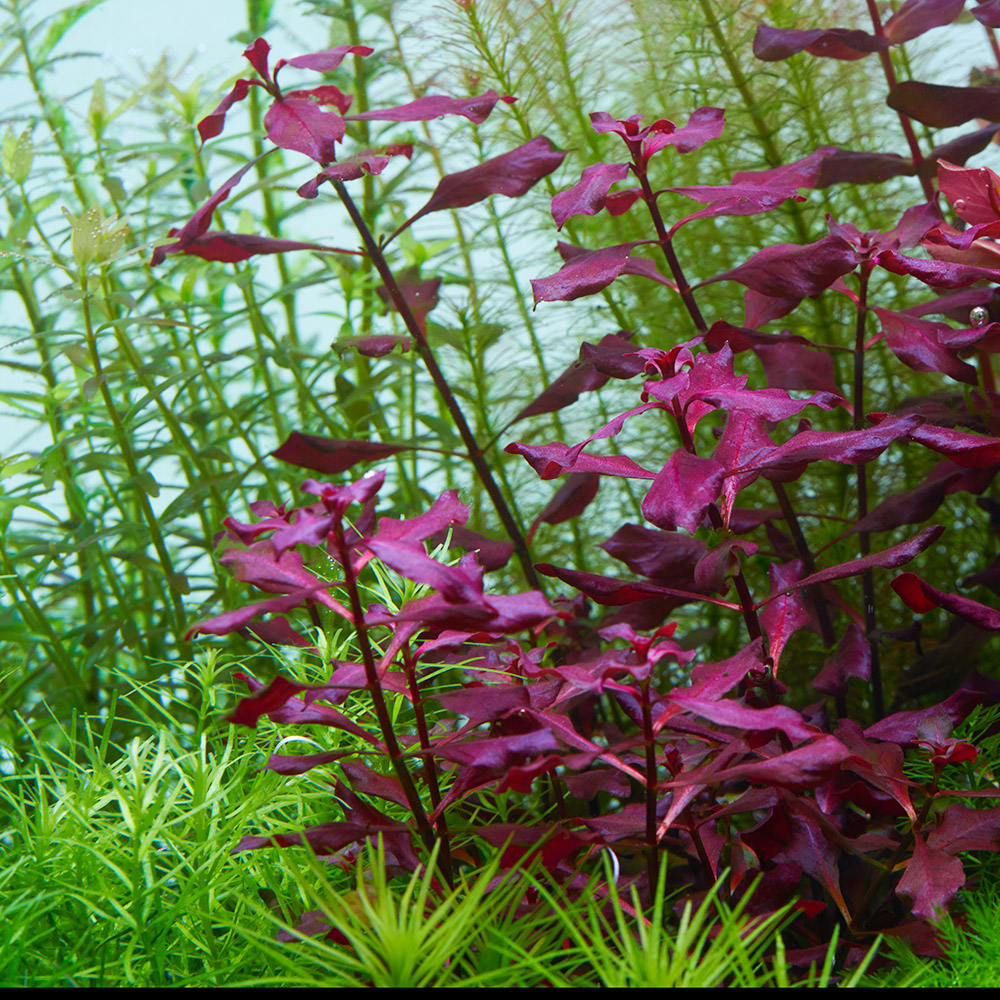
Hampshire-purslane
Ludwigia palustris
Survival dashboard
Medium
Added CO₂ beneficial
22–26 °C
5–8
Aquascaping
Substrate compatibility does not specify planting depth. Follow the care instructions below, especially for exposed rhizomes and crowns.
Trim schedule (hint)
Check growth regularly. Trim or thin when shoots crowd neighbors, reach the surface, or shade lower growth.
Description
Unlike most red Ludwigia species, this one keeps its reddish tones even under moderate light — it does not need strong CO₂ and high-light intensity to colour up. Ludwigia palustris, known as Hampshire-purslane or marsh seedbox, is one of the most widespread aquatic plants in the world, found across North America, Europe, and Africa.
The leaves are oval and arranged in opposite pairs along a sturdy stem. The upper side is olive-green to reddish-brown depending on light, while the underside is a paler green. Under medium to high light the top leaves develop a noticeable red or bronze tint. The plant grows fast at 22 to 26 °C and adapts to a broad pH range of 5 to 8.
CO₂ injection is not essential but produces denser, more compact growth. Regular trimming keeps the plant bushy — cut stems at the desired height and replant the trimmed tops in the same cluster.
It also grows emersed, producing small flowers without petals above the waterline. The emersed form has rounder, thicker leaves that differ noticeably from the submerged foliage. Propagation is reliable from cuttings and the plant recovers quickly from heavy trimming, making it a good beginner stem plant for low-tech tanks that want some red colour.
Source
Further reading on identification and aquarium care.
Was this page useful? Spot anything wrong?