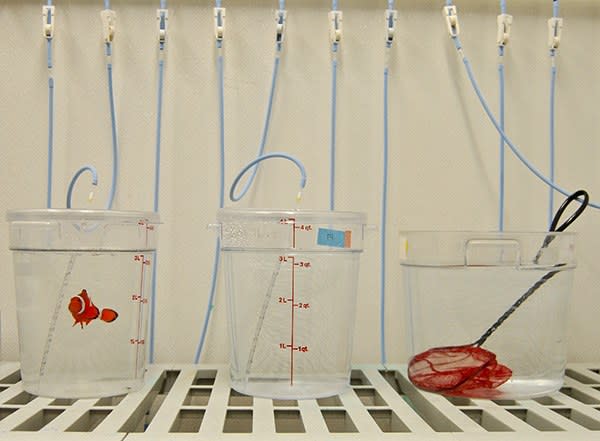
Representative photo. The product you buy may differ in size, colour or packaging.
Quarantine dip bucket
accessory
Used for: Quarantine tanks, Fish health, Tank maintenance
Description
A separate treatment container holds a fish for a supervised short dip or bath. Choose enough working space for the animal, an accurately measured water volume and access for observation and removal. A bucket used for a short procedure is different from an equipped tank used for ongoing quarantine. Follow the species- and product-specific procedure rather than a universal bucket recipe. The veterinary reference calls for matching dip-water temperature and pH to the aquarium and promptly removing distressed fish. Seachem’s ParaGuard directions likewise distinguish a separate dip container and monitoring for stress. Plan what happens after the dip. ParaGuard notes that returning a treated fish to infected water can undermine the procedure. Quarantine also involves separate designated equipment and ongoing observation, so a short dip alone does not replace a quarantine system or establish that a fish is free of infection.
Sources
- merckvetmanual.com — https://www.merckvetmanual.com/exotic-and-laboratory-animals/aquarium-fish/management-of-aquarium-fish
- seachem.com — https://www.seachem.com/paraguard.php
Further reading on identification and aquarium care.
Was this page useful? Spot anything wrong?