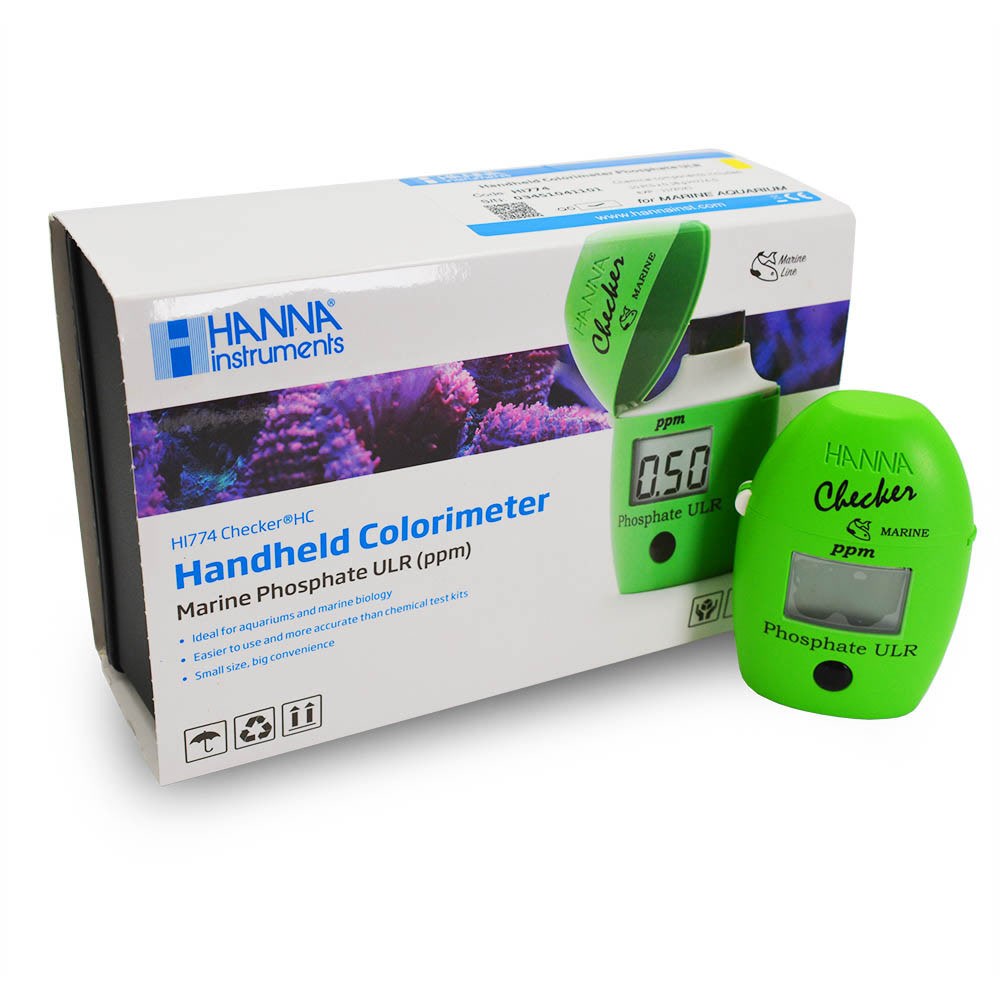
Representative photo. The product you buy may differ in size, colour or packaging.
Phosphate test
monitoring
Used for: Water testing, Tank maintenance
Description
Phosphate tests help investigate nutrient inputs from aquarium waste, food and source water. They can also support nutrient monitoring in a planted aquarium, where phosphate is present in fertilizers. Liquid color-comparison kits and reagent-based digital colorimeters are available; choose one compatible with freshwater or saltwater as required. Match the range to the concentration you need to distinguish. The API liquid phosphate kit reads 0–10 ppm, while Hanna HI713 reads 0.00–2.50 ppm. A lower range can suit lower-level monitoring, but display resolution is not the same as accuracy. Check both the scale and the manufacturer’s accuracy statement. Check the reporting basis. PO4 reports phosphate, while PO4-P reports orthophosphate as phosphorus; ppb and ppm also differ. An orthophosphate measurement is not a total-phosphorus measurement. Convert both the reporting basis and the unit before comparing results from different instruments. Use the selected test’s reagent and waiting instructions. The API kit specifies a three-minute development time and the appropriate freshwater or saltwater color card. Compare readings over time alongside changes in feeding, source water or fertilizer use. The test alone does not identify the cause of algae or set a phosphate target for every aquarium.
Sources
- apifishcare.com — https://www.apifishcare.com/products/api-phosphate-test-kit
- hannainst.com — https://hannainst.com/hi713-phosphate-lr.html
- pages.hannainst.com — https://pages.hannainst.com/hubfs/006-finished-content/Aquarium/phosphorus-and-phosphates-in-your-reef-tank--hanna-instruments.pdf
- images.salsify.com — https://images.salsify.com/image/upload/s---cLVjN_K--/988817bc46a97331fbc4f7f61898ba510ef86391.pdf
Further reading on identification and aquarium care.
Was this page useful? Spot anything wrong?