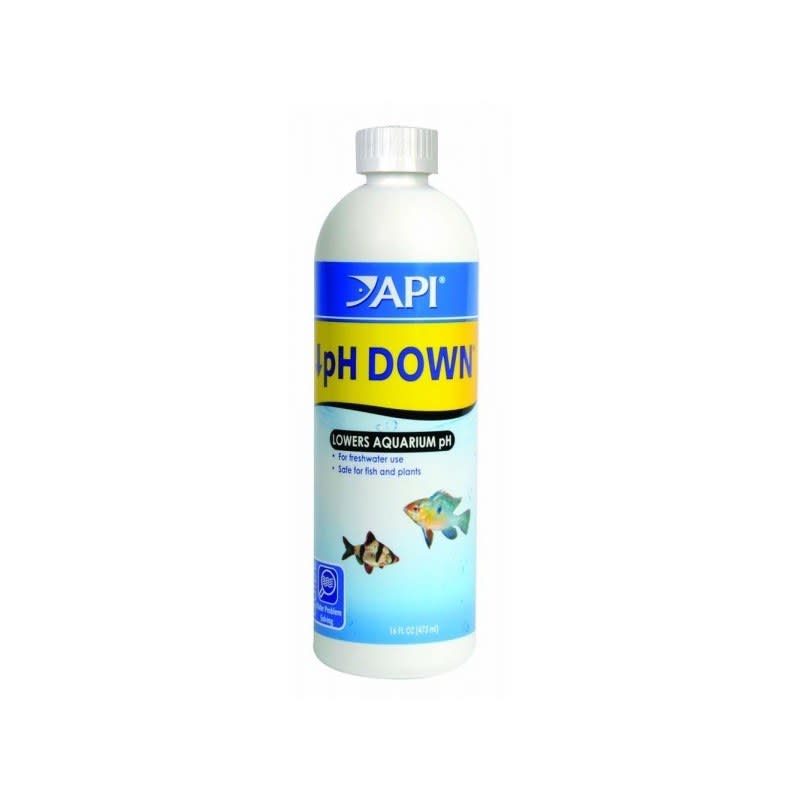
Representative photo. The product you buy may differ in size, colour or packaging.
pH up/down
treatment
Used for: Tank maintenance
Description
Aquarium pH adjusters raise or lower pH for a particular water-preparation need. Choose a product intended for the water type you use. API pH UP and pH DOWN are freshwater examples with separate instructions, rather than a single recipe for every aquarium. Check buffering as well as pH. API explains that carbonate and bicarbonate can resist a change or cause rebound. Seachem Alkaline Buffer is a sodium-bicarbonate-based example that raises KH and pH, while Acid Buffer reduces carbonate alkalinity as it lowers pH. The direction of adjustment does not identify every bottle’s ingredients. Measure before treatment and retest before another dose, following the selected label. Review the intended animals, source water and buffering arrangement instead of chasing a universal pH number. Product-specific mixing ratios or sensitivity guidance should not be turned into a generic dose or rate of change.
Sources
- apifishcare.com — https://www.apifishcare.com/products/api-ph-freshwater-aquarium-water-ph-raising-solution
- apifishcare.com — https://www.apifishcare.com/products/api-ph-down-freshwater-aquarium-water-ph-reducing-solution
- seachem.com — https://www.seachem.com/alkaline-buffer.php
- seachem.com — https://www.seachem.com/acid-buffer.php
Further reading on identification and aquarium care.
Was this page useful? Spot anything wrong?