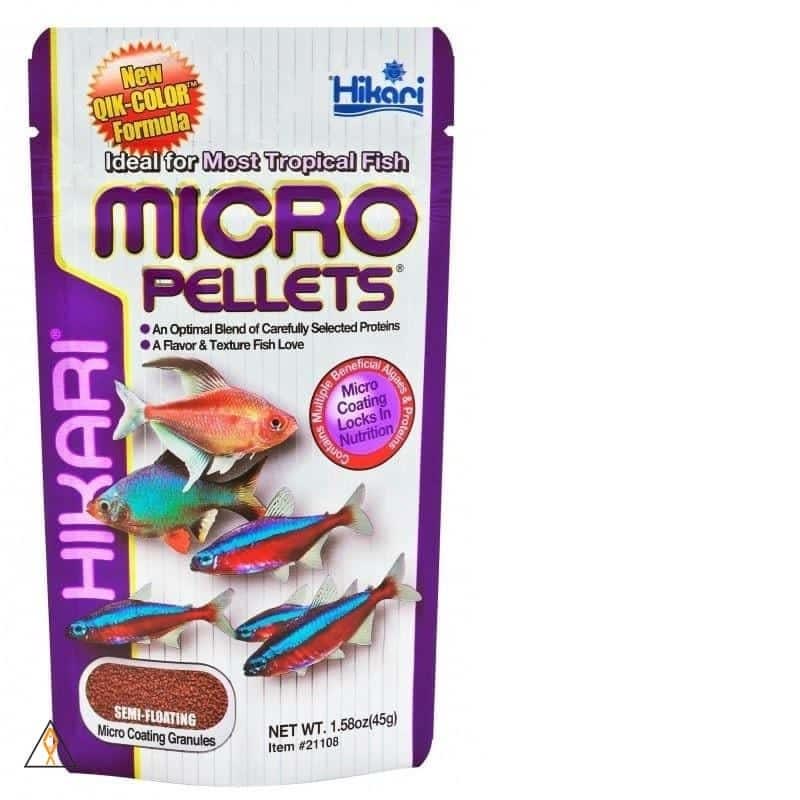
Representative photo. The product you buy may differ in size, colour or packaging.
Micro pellet
food
Used for: Tank maintenance
Description
Micro pellets are small prepared food particles intended for fish with smaller mouths. Choose a formulation appropriate to the fish as well as a particle size they can take. A “micro” name alone does not establish a standard diameter or the same nutritional profile across brands. Check the feeding layer. Hikari Micro Pellets is a semi-floating, slowly sinking example, so fish can encounter the food as it moves through the water. Other small pellets may behave differently; match the selected product to where your fish actually feed. Read the ingredients and intended diet. Micro Pellets combines marine and vegetable ingredients, including krill and spirulina; its small size does not make it a purely plant-based food. Follow the feeding directions for the selected product and watch consumption rather than applying a fixed percentage of body weight to every fish. Remove uneaten food and follow the package storage and best-before guidance. Hikari advises keeping its pelleted products cool and away from direct sunlight, moisture, humidity and heat. Opening-life recommendations are manufacturer-specific, so do not transfer one product’s period to every pellet.
Sources
- hikariusa.com — https://www.hikariusa.com/tropical_folder/micro_pellets.html
- hikariusa.com — https://www.hikariusa.com/faq.html
Further reading on identification and aquarium care.
Was this page useful? Spot anything wrong?