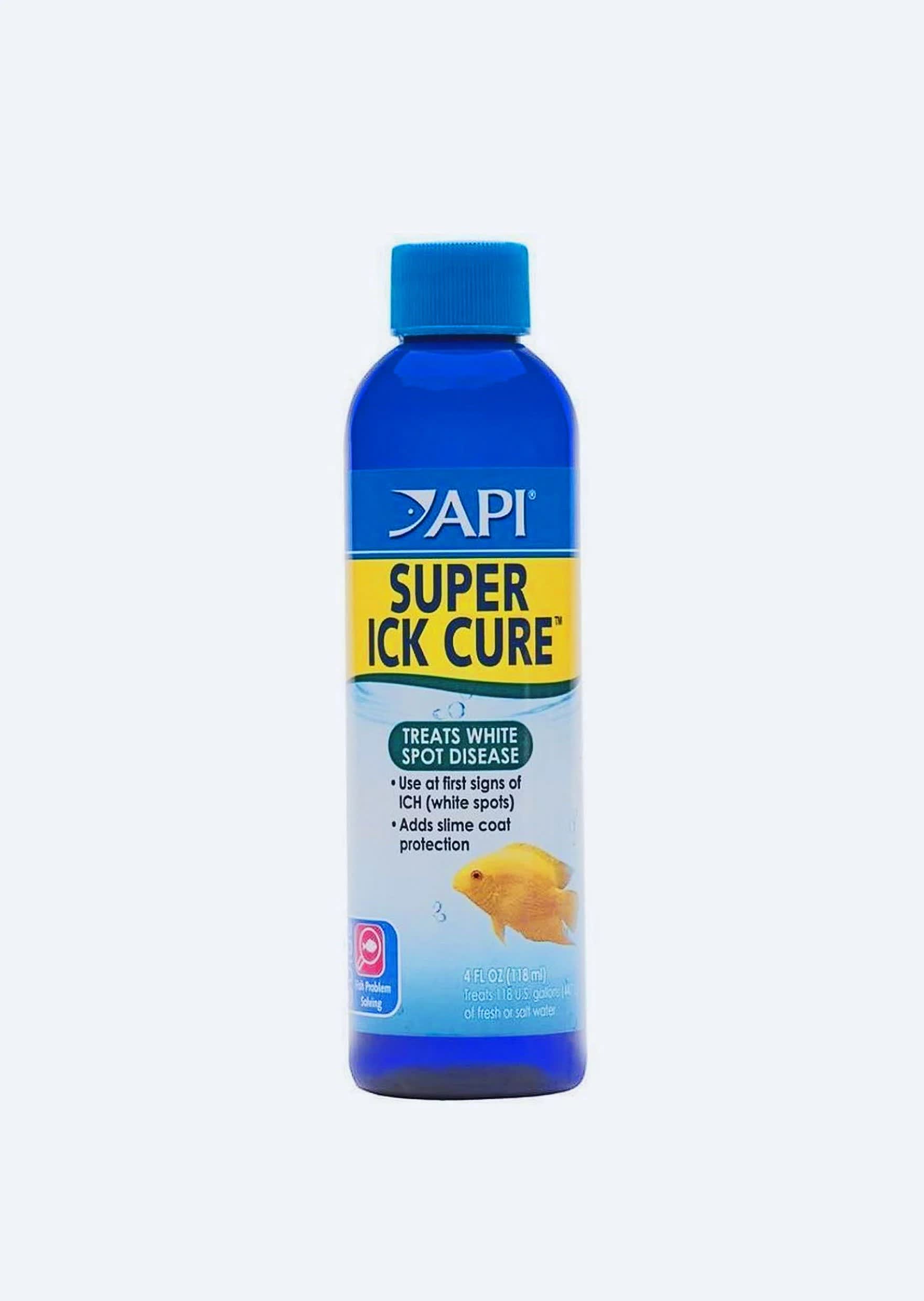
Representative photo. The product you buy may differ in size, colour or packaging.
Ich medication
treatment
Used for: Quarantine tanks, Fish health, Tank maintenance
Description
An ich medication is selected for the parasite, water type and animals being treated. API Liquid Super Ick Cure is one marketed example with its own liquid formulation and directions. Similar white spots or irritation do not establish that every aquarium needs the same product. Freshwater Ich has stages on the fish and in the environment. The veterinary reference describes encysted stages as resistant to chemical treatment, which explains why the visible spots alone do not determine when treatment is finished. Follow the chosen product’s full course rather than stopping simply because spots disappear. Check restrictions before using the medication in a stocked aquarium. API’s liquid product warns about scaleless-fish sensitivity and advises against use in tanks with invertebrates or reefs. Its directions call for continued aeration and removal of activated carbon during treatment. Repeat timing, dose and any temperature change must remain specific to the product and animals.
Sources
- apifishcare.com — https://www.apifishcare.com/products/api-liquid-super-ick-cure
- merckvetmanual.com — https://www.merckvetmanual.com/exotic-and-laboratory-animals/aquarium-fish/parasitic-diseases-of-fish
Further reading on identification and aquarium care.
Was this page useful? Spot anything wrong?