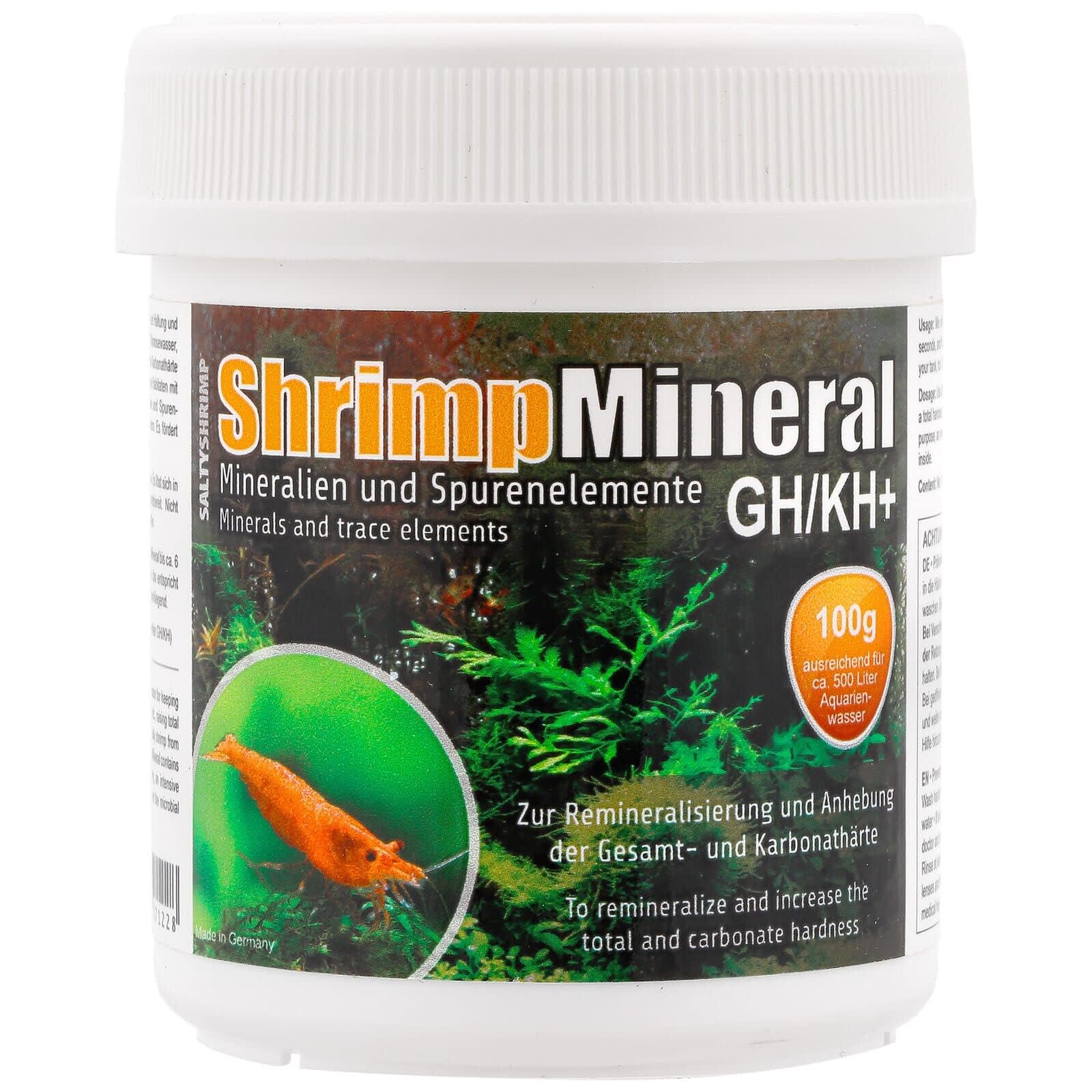
Representative photo. The product you buy may differ in size, colour or packaging.
GH+KH+ mineral
treatment
Used for: Tank maintenance
Description
A GH/KH+ mineral mixture remineralises low-mineral freshwater while raising both general and carbonate hardness. GH reflects calcium and magnesium concentrations; KH is associated with carbonate and bicarbonate alkalinity and helps stabilise pH. Measure them separately rather than treating one hardness reading as both. SaltyShrimp Shrimp Mineral GH/KH+ is an example designed to prepare neutral aquarium water for shrimp. Its recipe raises both measurements, whereas the manufacturer’s Bee Shrimp Mineral GH+ has little influence on KH. Choose by the animals’ intended water conditions and the actual formulation rather than assuming either mixture suits every shrimp. Mix outside the tank according to the chosen label, check the prepared water and close the container to keep moisture out. Product-specific dose ratios and conductivity figures are starting instructions for that product. They do not replace GH/KH measurements or provide a universal hardness or pH target.
Sources
- apifishcare.com — https://www.apifishcare.com/products/api-general-carbonate-hardness-test-kit
- saltyshrimp.de — https://www.saltyshrimp.de/english/shrimp_mineral_gh_kh_plus.html
- saltyshrimp.de — https://www.saltyshrimp.de/english/beesalt_bee_shrimp_mineral_gh_plus.html
Further reading on identification and aquarium care.
Was this page useful? Spot anything wrong?