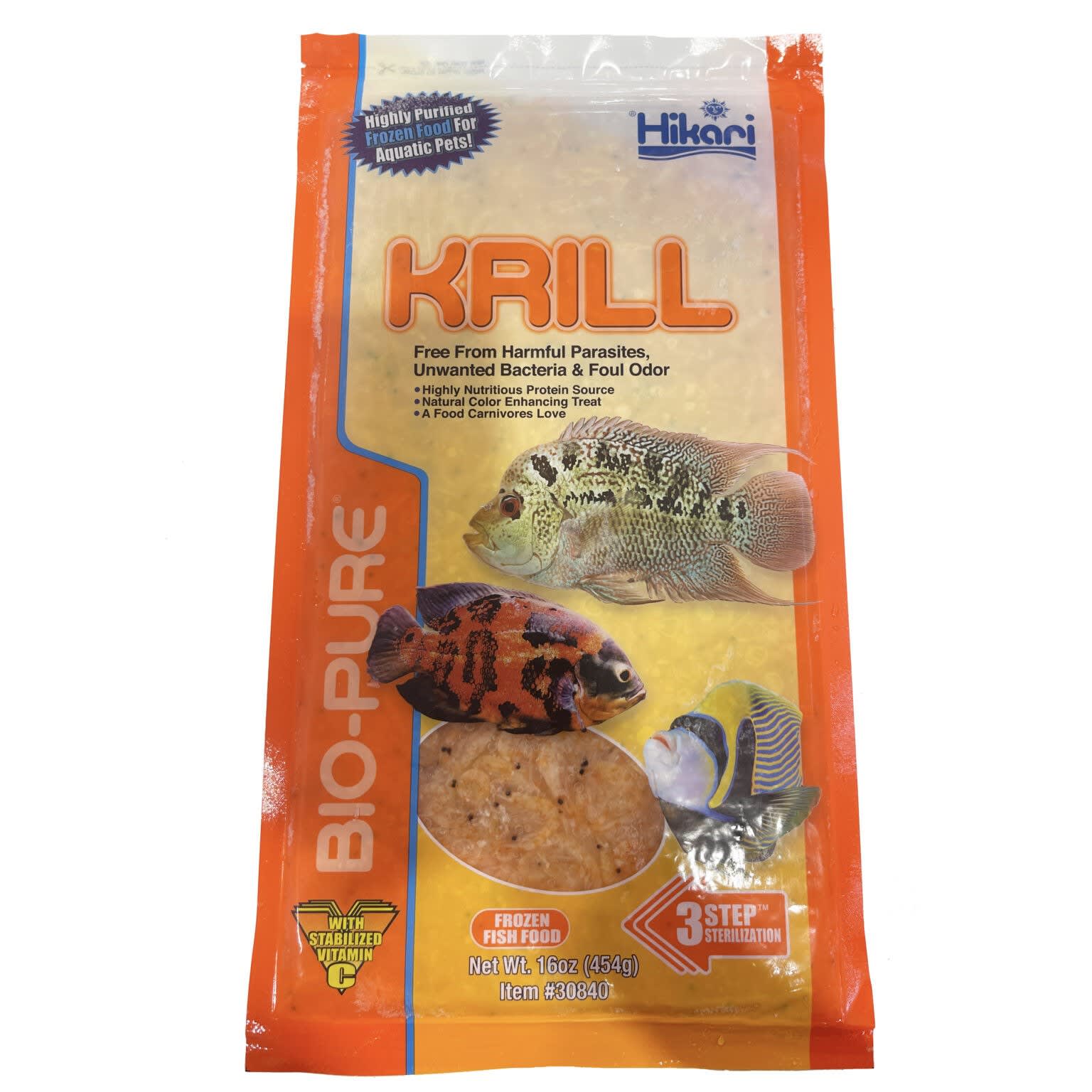
Representative photo. The product you buy may differ in size, colour or packaging.
Frozen krill/mysis
food
Used for: Tank maintenance
Description
Frozen krill and mysis are separate crustacean foods, available in products with different sizes and forms. Choose according to the fish’s mouth size and dietary needs. A combined category name does not mean krill and mysis are interchangeable or identical in size. Inspect the actual product form. Hikari’s frozen krill flat packs contain whole krill for larger fish, while its cube version uses processed krill sticks intended for smaller fish. Its Mysis Shrimp is a separate brackish-water example offered in cubes and flat packs. Not every krill cube contains whole animals, and not every mysis product has the same source. Check the intended dietary role and ingredients. These Hikari examples are described as treats; choose their place in a diet suitable for the fish. Frozen-food nutrition labels include substantial moisture, so raw percentages should not be used to rank them directly against dry pellets or flakes. Portion and feed according to the selected product. San Francisco Bay Brand’s guidance distinguishes cubes from flat packs, advises against microwave or hot-water thawing, and keeps unused portions in the freezer. It advises against refreezing completely thawed food. Remove uneaten food and discard any food whose condition is questionable.
Sources
- hikariusa.com — https://www.hikariusa.com/frozen_folder/krill.html
- hikariusa.com — https://www.hikariusa.com/frozen_folder/mysis_shrimp.html
- sfbb.com — https://sfbb.com/fish-tips-hints/
Further reading on identification and aquarium care.
Was this page useful? Spot anything wrong?