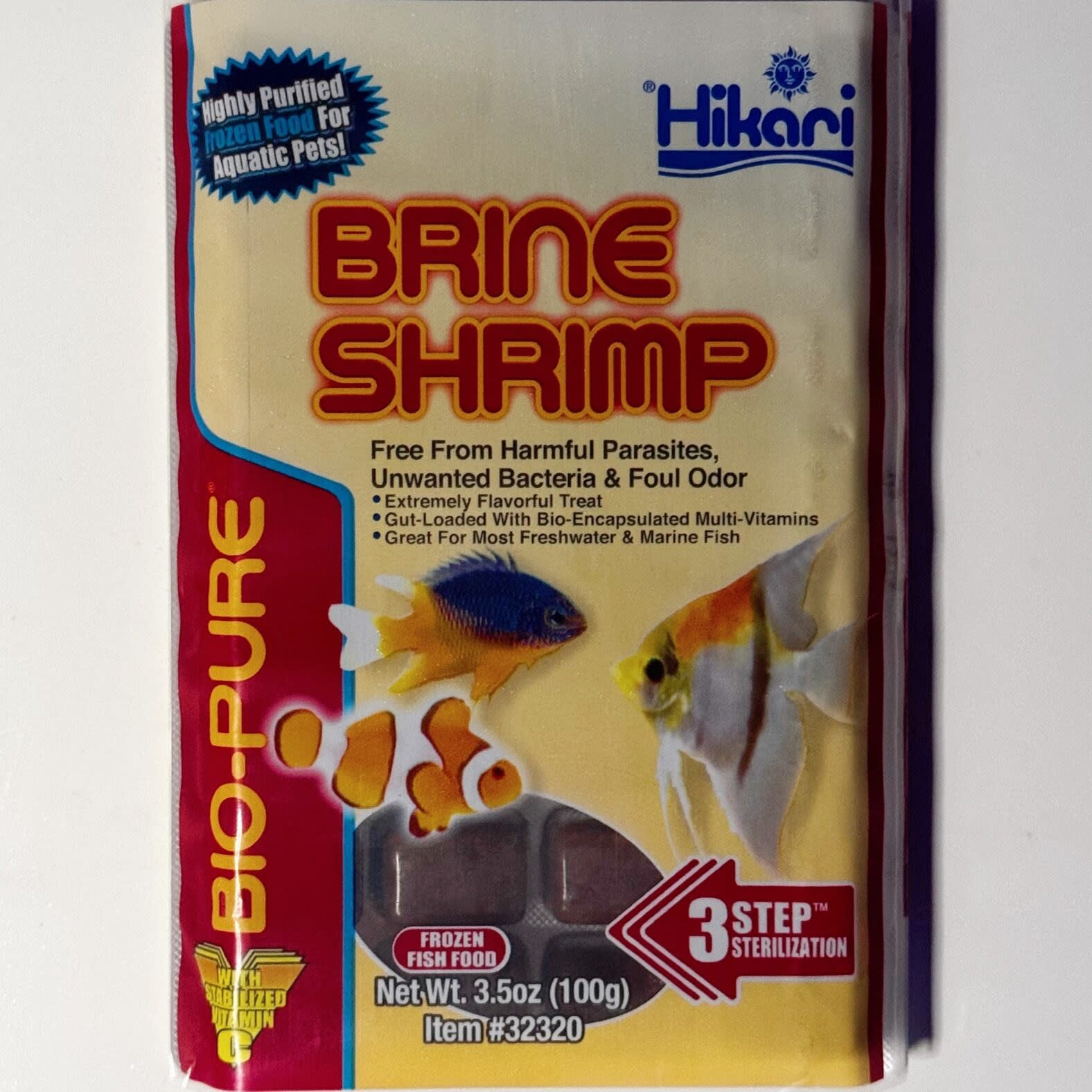
Representative photo. The product you buy may differ in size, colour or packaging.
Frozen brine shrimp
food
Used for: Shrimp tanks, Tank maintenance
Description
Frozen brine shrimp is an animal food sold in forms such as cubes and flat packs. It is distinct from brine-shrimp eggs for hatching and from live newly hatched food. Choose the particle form and feeding method for the mouths and feeding habits of the fish. Formulations vary. Hikari offers ordinary Bio-Pure Brine Shrimp and an Omega version enriched with fatty acids. Enrichment belongs to the named product; it should not be assumed for every frozen brine shrimp. Check whether the selected food is a treat, supplement or part of the diet you intend to provide. Follow the product’s preparation instructions. San Francisco Bay Brand recommends feeding its cubes frozen and describes portioning flat packs, with thawing as an option. Its guidance advises against microwaving or hot-water thawing. A universal thaw-and-rinse rule should not replace the directions for the food in hand. Keep unused food frozen and portion only what you need. San Francisco Bay Brand advises against refreezing completely thawed fish food and recommends discarding food of questionable condition. Remove uneaten portions and adjust feeding to actual consumption. Storage and feeding guidance should come from the selected product rather than a fixed timetable for all fish.
Sources
- hikariusa.com — https://www.hikariusa.com/frozen_folder/brine_shrimp.html
- hikariusa.com — https://www.hikariusa.com/frozen_folder/omega_brine_shrimp.html
- hikariusa.com — https://www.hikariusa.com/faq.html
- sfbb.com — https://sfbb.com/fish-tips-hints/
Further reading on identification and aquarium care.
Was this page useful? Spot anything wrong?