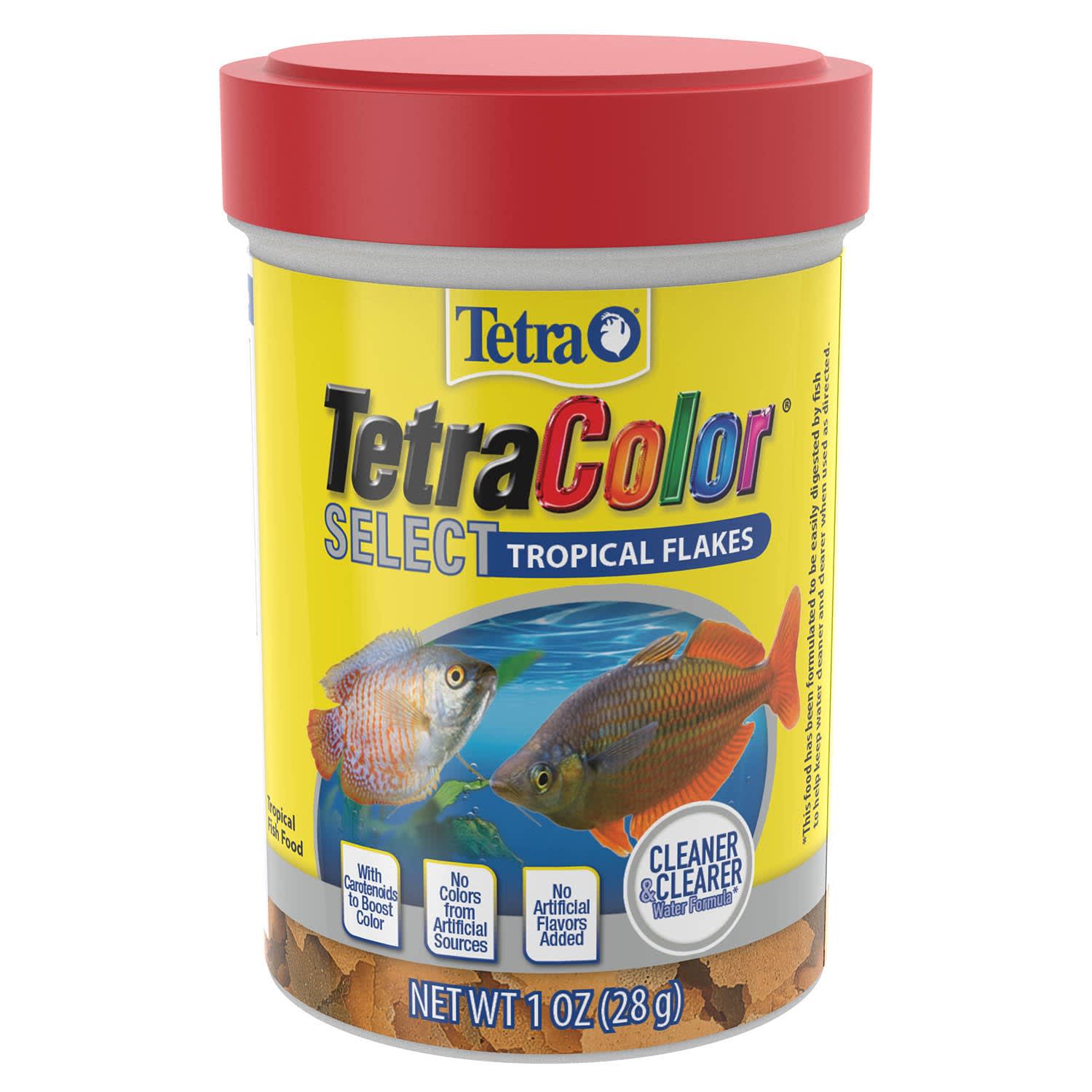
Representative photo. The product you buy may differ in size, colour or packaging.
Flake food
food
Used for: Tank maintenance
Description
Flake fish food is a prepared diet in thin pieces. Choose a product for the fish and water type you keep. TetraMin Flakes, for example, is described as a complete flake mix for freshwater ornamental fish; that claim belongs to its formulation rather than every food sold in flake form. Flakes can make food available near the surface before it moves lower in the aquarium. TetraMin’s flakes float for a while and then slowly sink. Check the behaviour and piece size of the selected food against the mouths and feeding positions of your fish. Compare the ingredients and intended use, rather than assuming flakes are all the same diet. TetraMin includes both animal and plant-derived ingredients. Its analysis and pack sizes are product specifications, and should not be treated as the composition or serving size of all flake foods. Use the package feeding, storage and expiry instructions, and observe whether the fish eat the offered pieces. Select a pack size you can use as directed. A complete-food label does not remove the need to match the diet to the fish, and a floating flake is not automatically suitable for every bottom feeder.
Source
Further reading on identification and aquarium care.
Was this page useful? Spot anything wrong?