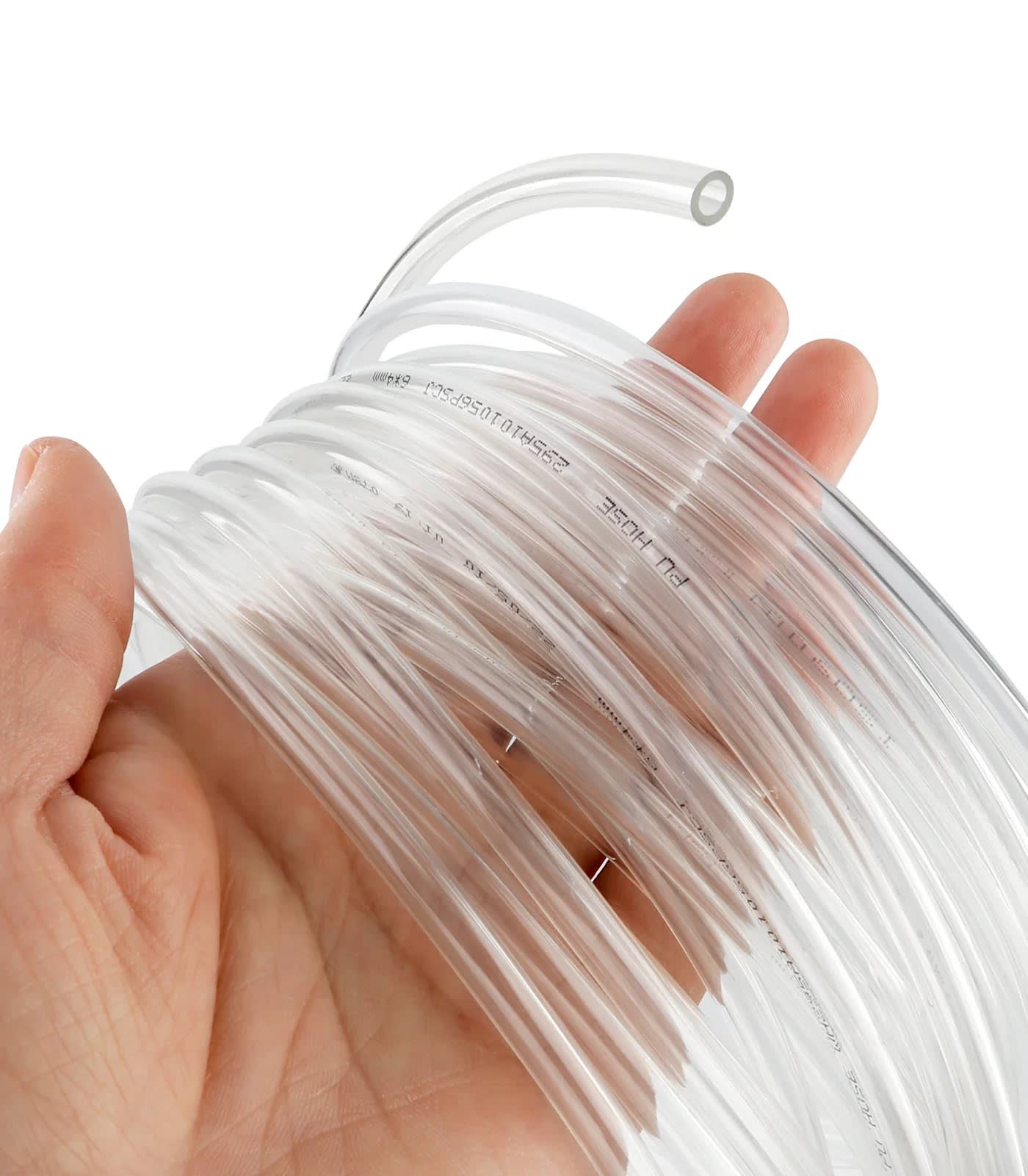
Representative photo. The product you buy may differ in size, colour or packaging.
CO2 tubing
co2
Used for: Planted tanks, CO2 injection
Specifications
| Specification | Value |
|---|---|
| Inside diameter | 4 mm/ 0.16 inches |
| Outside diameter | 6 mm/ 0.24 inches |
| Length | 10 m/ 32.8 ft |
| Material | PE plastic |
Source checked on 2026-10-01.
| Specification | Value |
|---|---|
| Material | polyurethane |
Source checked on 2026-10-01.
Description
CO2 tubing carries gas through an aquarium injection system, linking the regulator, check valve and diffusion equipment. Select tubing intended for the CO2 equipment being connected, and follow that system's connection instructions. A pressure-resistant supply line and a soft connection to glassware can serve different jobs: ADA specifies pressure-resistant tubing between its regulator and check valve, but prohibits connecting that tubing directly to its glass products. Size labels must distinguish inside diameter from outside diameter. A 4/6 mm tube has a 4 mm bore and a 6 mm outside diameter. Match both the tubing specification and the connector requirements rather than treating any tube labelled 6 mm as interchangeable. The Boao PE tube in the specifications below is the 4 mm inside / 6 mm outside, 10 m version; those measurements do not describe every tube in this category. Aquarium CO2 tubing is available in different materials and lengths. The examples below include polyurethane and polyethylene, while ADA offers its pressure-resistant line in 2 m and 20 m lengths. Choose a length that reaches the intended mounting positions, and choose the connection material required by the equipment, especially where glass fittings are involved. A material name or nominal diameter alone does not establish a working-pressure rating.
Sources
- adana.co.jp — https://www.adana.co.jp/en/contents/products/na_co2/detail08.html
- amazon.com — https://www.amazon.com/dp/B09Y1QB8DQ
- jbl.de — https://www.jbl.de/en/products/detail/9439/jbl-proflora-co2-taifun-safestop?country=us
- amazon.com — https://www.amazon.com/dp/B08YYPJZ36
Further reading on identification and aquarium care.
Was this page useful? Spot anything wrong?