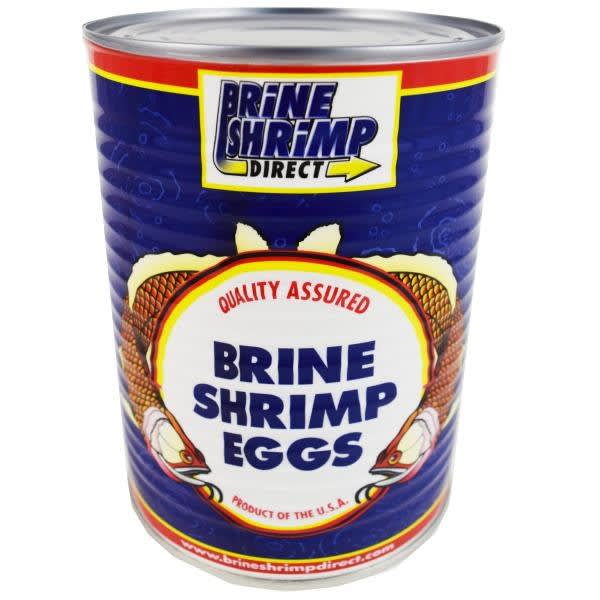
Representative photo. The product you buy may differ in size, colour or packaging.
Brine shrimp eggs
food
Used for: Shrimp tanks, Breeding tanks, Tank maintenance
Description
Brine shrimp eggs sold for hatching are dormant Artemia cysts used to produce live nauplii. Choose a hatchable product and follow its batch instructions. Hatchability and the quantity produced depend on the product, storage and hatching conditions. Check the treatment and intended use. Decapsulation removes the outer shell, but does not alone identify whether the product can hatch. Brine Shrimp Direct describes hatchable decapsulated cysts and also sells a separately labelled non-hatching, shell-free food. A direct-feeding non-hatching product should not be bought as a substitute for hatchable eggs. Prepare the saltwater and supply the temperature, light and movement specified for the cysts and hatchery. After hatching, separate nauplii from empty shells and unhatched material. Aquarium Co-Op describes settling and light-assisted collection, then using a net or sieve to rinse away the hatching water. Keep unused cysts sealed and protected from moisture and heat. Aquarium Co-Op recommends refrigerated or frozen storage for its opened eggs. Follow the actual product’s storage directions and check that the resulting nauplii are an appropriate size and food for the fish you intend to feed.
Sources
- aquariumcoop.com — https://www.aquariumcoop.com/products/aquarium-co-op-brine-shrimp-eggs
- brineshrimpdirect.com — https://www.brineshrimpdirect.com/about-us/frequently-asked-questions/what-decapsulated-brine-shrimp-eggs/
- brineshrimpdirect.com — https://www.brineshrimpdirect.com/decapsulated-brine-shrimp-eggs-non-hatching-8-ounces
Further reading on identification and aquarium care.
Was this page useful? Spot anything wrong?