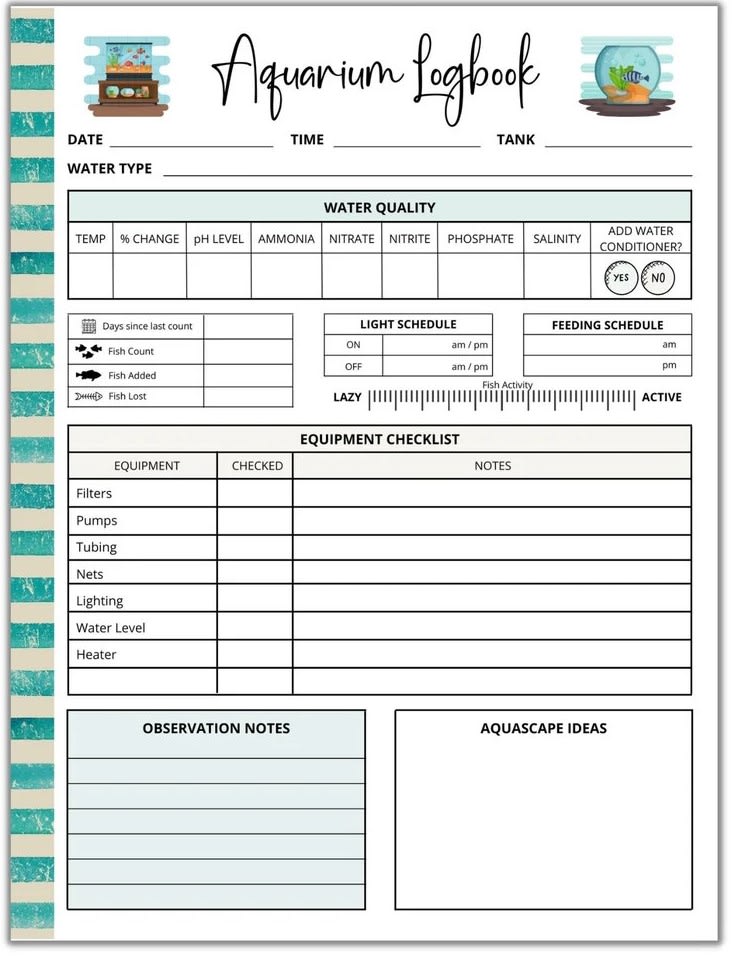
Representative photo. The product you buy may differ in size, colour or packaging.
Aquarium logbook
accessory
Used for: Tank maintenance
Description
The case for keeping a log is easiest to see from the far end, in what a clinician asks for once a tank has already gone wrong. The Merck Veterinary Manual's list is specific: how many animals are affected, whether one species or several, how long it has been going on, the volume and design of the system, the number and size of animals stocked, which species, what was added recently, what the quarantine protocol was, and which medications the fish have already had. Very little of that survives two weeks in anyone's memory, and the two entries that matter most are the ones nobody thinks to write at the time: the date a new fish went in, and the date and dose of the last treatment. Something introduced with a purchase surfaces on a delay, and "we added some fish a few weeks back" is a much weaker history than a date somebody wrote down. A log also holds the readings that only mean anything as a series. During cycling, Merck has you dose ammonia and then track ammonia, nitrite and nitrate until neither of the first two can be found, which is a sequence rather than a single test. Old tank syndrome is the same shape running backwards: a pH that has been drifting down for months is obvious in a column of figures and invisible in one reading. Format matters far less than the habit. A pre-printed book, a spreadsheet and a notes app all work, and the tidiest of them is the one you will actually fill in. What each entry needs is a date, the reading or the action, and enough surrounding detail that it still makes sense to somebody else reading it cold, because eventually that somebody is a vet who was not there.
Source
Further reading on identification and aquarium care.
Was this page useful? Spot anything wrong?