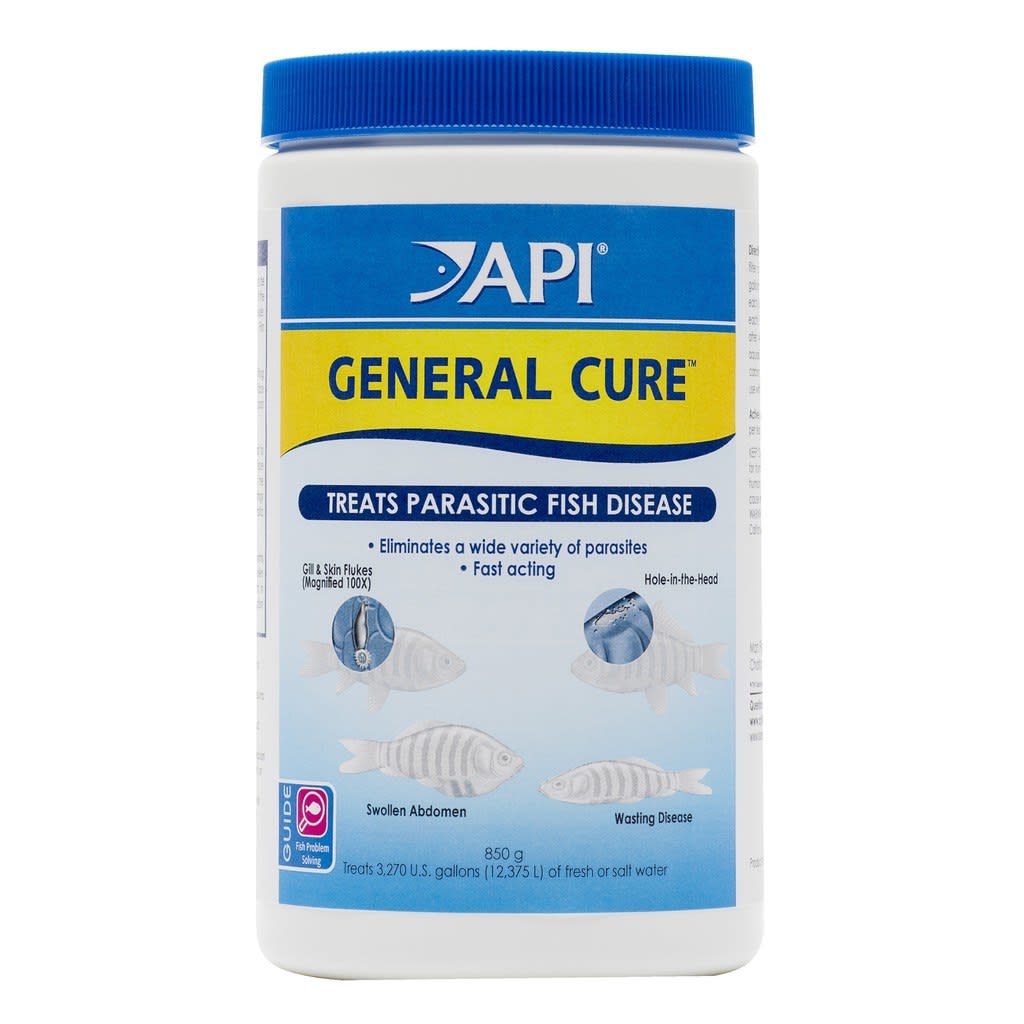
Representative photo. The product you buy may differ in size, colour or packaging.
Antiparasitic
treatment
Used for: Quarantine tanks, Fish health, Tank maintenance
Description
Fish antiparasitic products differ in the organisms they target and the route of treatment. Identify the suspected parasite and choose a product labelled for the relevant animals and water type. A broad parasite category does not mean one medication treats every worm, crustacean or protozoan. Seachem MetroPlex identifies metronidazole and markets the product for certain protozoan and anaerobic bacterial conditions. API General Cure has different labelled uses, including gill and skin flukes; its manufacturer-linked SDS identifies metronidazole and praziquantel. These are named formulations, not the composition of every antiparasitic product. Check the actual administration and compatibility directions. MetroPlex separates water dosing from medicated food and requires removing invertebrates for water treatment. General Cure provides its own aeration, activated-carbon and repeat-dose directions. Do not transfer a food recipe, dose or course between products or assume a label’s advertised range confirms the diagnosis.
Sources
- seachem.com — https://www.seachem.com/metroplex.php
- apifishcare.com — https://www.apifishcare.com/products/api-general-cure-powder-packets
- images.salsify.com — https://images.salsify.com/image/upload/s--wBhXooOX--/5d8f6f1f7c535b5cd1057fd49308b0beba1f8ccc.pdf
Further reading on identification and aquarium care.
Was this page useful? Spot anything wrong?