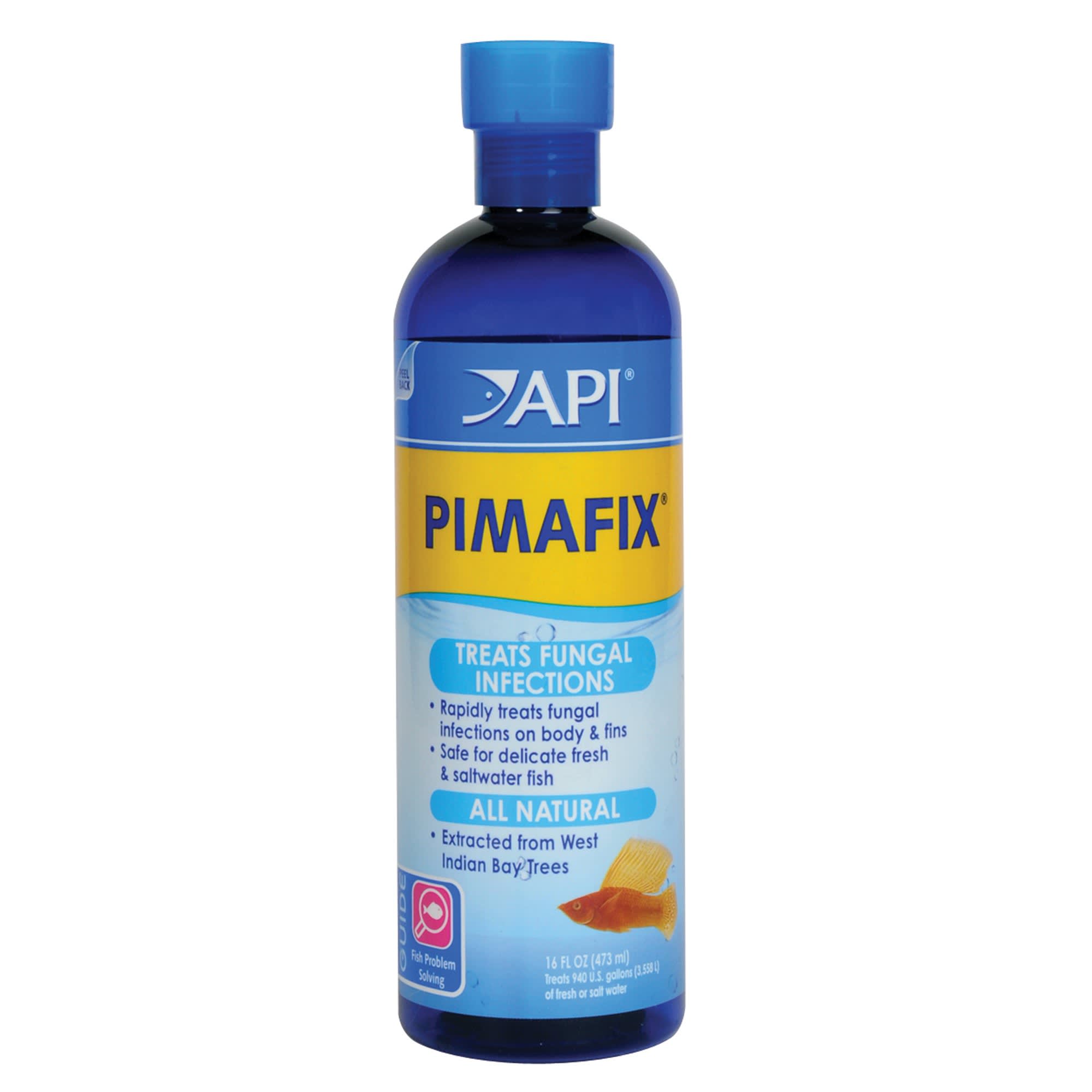
Representative photo. The product you buy may differ in size, colour or packaging.
Antifungal
treatment
Used for: Quarantine tanks, Fish health, Tank maintenance
Description
Aquarium antifungal products are offered for particular fish conditions, but a cottony-looking growth is not a complete diagnosis. API PIMAFIX is a named product marketed for fungal and some bacterial symptoms. Check the actual fish, water conditions and product indication before selecting it. Products with similar marketed indications can have different formulations and restrictions. KanaPlex is kanamycin-based, while ParaGuard combines aldehydes, malachite green and protective polymers. Neither name establishes the ingredients or compatibility of every antifungal remedy. Follow the selected product’s treatment and filtration instructions. PIMAFIX calls for attention to activated carbon and UV during treatment; other remedies have different restrictions. The veterinary reference also calls for environmental and handling changes with external Saprolegnia infections. Product promotion should not become a promise to cure every fungal-looking lesion.
Sources
- apifishcare.com — https://www.apifishcare.com/products/api-pimafix-antifungal-freshwater-and-saltwater-fish-remedy
- seachem.com — https://www.seachem.com/kanaplex.php
- seachem.com — https://www.seachem.com/paraguard.php
- merckvetmanual.com — https://www.merckvetmanual.com/exotic-and-laboratory-animals/aquaculture/mycotic-diseases-in-aquaculture
Further reading on identification and aquarium care.
Was this page useful? Spot anything wrong?