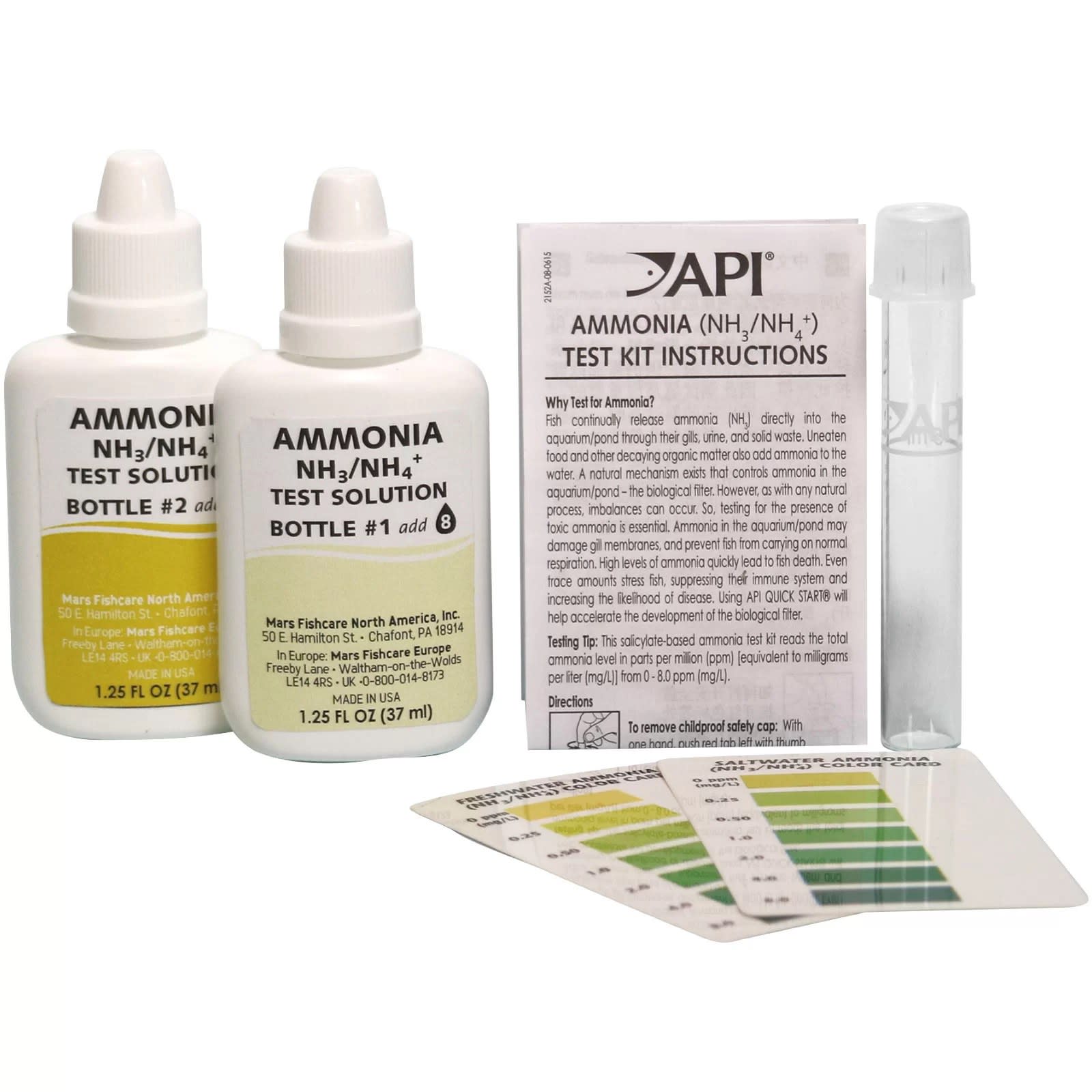
Representative photo. The product you buy may differ in size, colour or packaging.
Ammonia test liquid
monitoring
Used for: Water testing, Tank maintenance
Description
Liquid ammonia tests help monitor a new aquarium and investigate water-quality problems. They use a measured water sample, reagents and a color comparison after a specified development time. Choose a kit approved for freshwater or saltwater as appropriate, and use its matching color chart. Check what the result measures. Total ammonia combines ammonia (NH3) and ammonium (NH4+); free-ammonia tests measure NH3 separately. Salicylate and Nessler reagent tests and sensor-based tests use different detection methods. A total-ammonia result is not a direct reading of free ammonia, and the same number should not be interpreted as the same measurement across both types. Choose the range and chart spacing for the concentrations you need to monitor. For example, the API liquid kit reads 0–8 ppm; that range belongs to that kit. Record the unit and detection target alongside the result rather than assuming every ammonia kit reports ammonia as nitrogen. Follow the selected kit’s sample volume, mixing and waiting instructions. When using an ammonia-binding conditioner, check the test manufacturer’s compatibility guidance before interpreting the result.
Sources
- apifishcare.com — https://www.apifishcare.com/products/api-ammonia-test-kit
- seachem.com — https://www.seachem.com/multitest-ammonia.php
Further reading on identification and aquarium care.
Was this page useful? Spot anything wrong?